
Why Does Pain Persist? Revisiting the Brain–Body Connection

I wrote this piece back in 2012, when I was thinking deeply about a question that still fascinates me: Why does pain sometimes come and go, while other times it lingers long after an injury — or worse, an ache that mysteriously appears out of nowhere—- no definable reason and becomes a persistent nagging problem that stops you from doing the activities that bring you joy each day.
Rereading it today, I recognize the curiosity that has guided so much of my work. I was trying to understand the conversation between the brain and body, and how that conversation might influence the way we experience pain.
A great deal has been learned about pain since then, and there is still much to discover. I’m sharing my original article as a snapshot of what I was exploring at the time—not as an updated scientific explanation. Below it, I’ve added a present-day reflection on how those questions connect to what feeling good means to me now.
1000 postures, but only one structure
Why does pain exist? What causes it?
How does it originate and once it’s there, why does it sometimes come and go and sometimes it comes and stays? Are there different types of pain? Not just intensity but actually different reasons we sense it?
I love asking these types of questions to myself just to see what I might reply as an answer. I have seen thousands of people in pain for thousands of different reasons meaning that the circumstance that inflicted the injury or disease is different. However, I believe (and I’m not alone on this idea) that the sense of pain is created by one thing – your brain.
Pain is the end result of injury, disease, accidents, and anything in between. In a recent TEDx Talk, Lorimer Moseley discussed “Why Things Hurt” and said, “Pain is a construct of the brain”. I love that quote. It’s true. The perception of pain originates in the brain but it creates it for a reason. Survival. It doesn’t matter if you cut yourself, bump your head, burn your skin, twist your ankle, break a bone… or even develop a systemic disease, your brain is constantly evaluating messages it is sent from the body, most specifically your sensory nerve endings.
It’s a brilliant orchestration that occurs from the moment you sustain a bodily injury. The receptors in your superficial fascia and skin are the first to act and detect issues are called nociceptors. They are free nerve endings present relatively everywhere because fascia is everywhere and most of these nociceptors are embedded in your fascia. If nociceptors are activated, there is a very fast nerve impulse traveling along nerve fibers (afferent nerve fibers) and send a message to your brain.
Your brain, much like me then asks questions, “Is this a dangerous situation? Has anything like this happened before? What measures must be taken to preserve this body’s life and make sure it doesn’t die? The thalamus and regions of the brain then get involved to determine the best way to achieve the most beneficial outcome – to save your life.
Pain is part of your survival mechanism. It’s your body’s way of saying, “Ah, hey… something is wrong here. Pay attention please and help me out.” Hopefully you then consciously do something to help your body out and fix the issue.
The question remains though, why does pain sometimes come and go once the situation is no longer life threatening and sometimes it comes and stays even though there is no life threatening situation?Ah, so here’s where things get more intriguing and where I believe more research and science is needed. When nociceptors react and start sending the message, “danger, danger… something is wrong here” sometimes they keep sending the same message yet the danger isn’t really there.
Here’s my theory and why I believe MELT helps so many people so fast. You have to get the nociceptors (and other sensory receptors) to sense something different. When an injury occurs, the connective tissue is frequently what gets damaged. (This is why doctors sometimes can’t find anything wrong with you even when you have an MRI and X-rays. When the environment around your sensory nerve endings is damaged, it’s like rubbing sandpaper and sticky glue around the nerve endings. Although there’s no external damage, inside there is still a problem.
The first step with chronic pain is to adjust the environment your nerves live in. Give them temperature and pressure change in a positive way and suddenly the message shifts. You can’t cause pain or self-inflict pain to get out of pain. That’s why using a hard roller or balls on your body and applying intense direct pressure on sensitive spots doesn’t seem to resolve underlying issues in your connective tissue environment.
You don’t want to overexcite overactive nociceptors. It makes no sense. You have to gently ease positive compression into the body, allow the body to adapt, respond, and adjust on its own. You can’t force it to occur. MELT is the only method of self care that really takes precise steps, exact measures to help deter the unnecessary pain signals from occurring.
You don’t want to turn off or sever the potential for your body’s alarm system from working. That’s why popping a pain reliever never gets to the root cause of nagging pain symptoms. But if there is no fire to put out and your nociceptors are simply crying wolf because their environment is damaged, it seems like the easiest resolve is to change the environment. One more reason you should MELT. If we learn how to change how our brain perceives our body, we experience our life in a different way. I love it when I answer my own questions in a simple blog. Get out of pain. Let me and the slew of MELT Instructors listed on this site help you.
From Pain Relief to Feeling Good
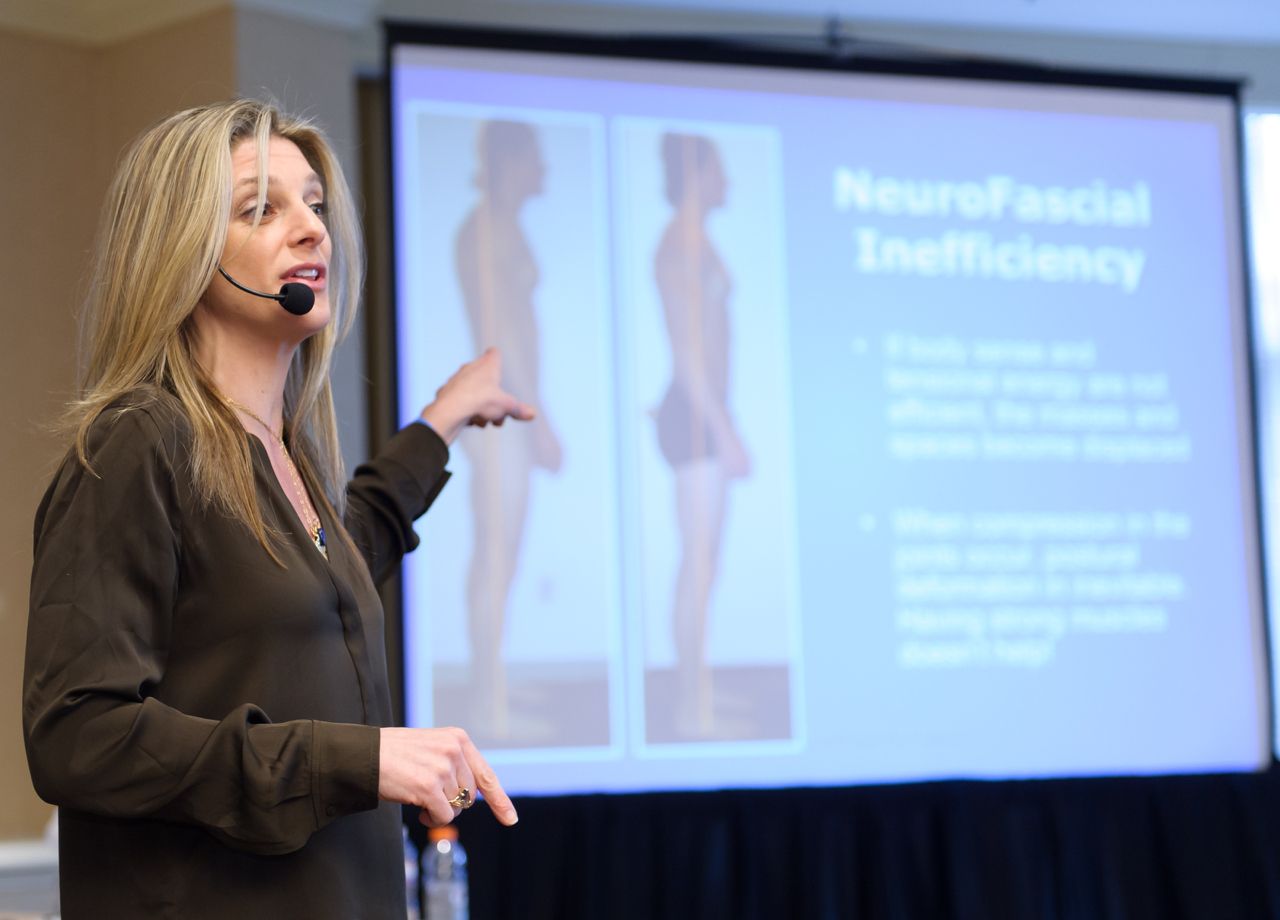
I wrote the original version of this article back in 2012.
Reading it today, what strikes me most isn't how much I thought I knew about pain. It's how many questions I was asking.
Why does pain come and go? Why can an injury heal, yet discomfort remain?
And why do some people find relief while others continue struggling, even when they're doing everything they believe they should?
Those questions helped shape my work and the way I approached the body. I wanted to understand more than what hurt. I wanted to understand how the body responds, adapts, and communicates.
Fourteen years later, I'm still asking questions. But my perspective has expanded.
After decades of working with people through MELT, and through my own experiences with aging and watching people I love navigate changes in their health and mobility, I've come to think about feeling good in a much broader way.
To get up in the morning and move with confidence. To reach, bend, walk, and do the ordinary things we rarely appreciate until they become difficult. To trust your body enough to keep experiencing the world.
In 2012, I was fascinated by the body's protective responses and how the brain interprets information from the nervous system. That curiosity remains. But today, I'm just as interested in the relationship we build with our bodies over time.
I've learned that self-care isn't something we do only when something goes wrong. It's an ongoing practice of paying attention, responding with intention, and creating opportunities to move and feel better.
And I've learned that consistency matters more than intensity.
The science continues to evolve, and so does my understanding. That's one of the things I love most about this work. There will always be more to discover, more questions to ask, and more opportunities to reconsider what we think we know.
When I look back at the woman who wrote this article in 2012, I recognize that curiosity immediately.
What has changed is how deeply I understand what we're really working toward.
— Sue Hitzmann